The Manitoba Branch of the Consumers’ Association of Canada (CAC Manitoba) regularly engages in research and public education initiatives that examine issues affecting consumers, with particular attention to those that disproportionately impact vulnerable consumers. One group that can face unique consumer challenges is newcomers to Canada, who must navigate unfamiliar systems, markets, and services while establishing their lives in a new country.
For many immigrants and refugees, settling in Canada involves making important decisions related to housing, employment, financial services, telecommunications, transportation, insurance, and other aspects of daily life. Since the publication of CAC Manitoba's Consumer Guide for Recent Immigrants in 2013, significant changes have occurred in Canada's economic, technological, and social landscape. Newcomers today face rising housing costs, increasingly complex financial products and services, rapid technological change, and a growing number of scams and fraudulent practices targeting vulnerable consumers.
To better understand these challenges and provide newcomers with relevant and practical consumer information, CAC Manitoba has undertaken a project- New to Canada? A consumer guide for newcomers- to understand how best to revise and modernize this guide (funded by Innovation, Science and Economic Development Canada’s Contributions Program for Non-profit Consumer and Voluntary Organizations*). The updated guide will reflect the current realities facing newcomers and provide accessible, user-friendly information to help immigrants and refugees make informed decisions and successfully integrate into Canadian society.
The project seeks to answer several important questions, including:
-What consumer challenges are newcomers to Canada experiencing in today's social and economic environment?
-What information, tools, and resources do newcomers need to make informed consumer decisions? How have changes in housing markets, financial services, technology, and consumer fraud affected the experiences of immigrants and refugees?
-How can a modernized consumer guide better support newcomers as they navigate life in Canada? All of these questions will be explored with an emphasis on ensuring that the perspectives and experiences of newcomers themselves guide the development of the final resource.
The methodology includes: an extensive review of literature and public legislation relevant to newcomer experiences and consumer issues; key informant interviews with representatives from stakeholder organizations across Canada, including newcomer-serving agencies, governments, academics, researchers, businesses, and organizations representing vulnerable consumers; a national survey of immigrants and refugees to better understand settlement experiences and consumer needs; five focus groups conducted across Canada, including one French-language focus group; a virtual engagement workshop to share findings and gather feedback from participants; and the ongoing involvement of an advisory panel and working group to help interpret findings and contribute to the development of recommendations and content for the revised guide.
All communication and engagement activities will be guided by participatory and community-based research principles that centre newcomer voices throughout the project. The work will also be informed by a Gender-based Analysis Plus (GBA+) lens to promote inclusivity, representation, and accessibility, ensuring that the final guide reflects the diverse experiences of newcomers across Canada.
The project will culminate in the publication of an updated newcomer guide in both English and French. The guide will be made available free of charge online, distributed to stakeholder organizations in a reproducible format, and provided directly to newcomers in print. In addition, consumer-friendly summaries and project results will be shared through CAC Manitoba's website and social media channels to encourage public engagement and increase awareness of consumer issues affecting newcomers.
*Funder Acknowledgement
The Consumers Association of Canada (Manitoba Branch) has received funding from Innovation, Science and Economic Development Canada’s Contributions Program for Non-profit Consumer and Voluntary Organizations. The views expressed in (the final) project report are not necessarily those of Innovation, Science and Economic Development Canada or of the Government of Canada.
The Manitoba Branch of the Consumers’ Association of Canada (CAC Manitoba) regularly engages in research that examines issues which impact consumers, with particular attention to those that affect vulnerable consumers. One issue that has become increasingly significant for Canadian households is the rising cost of food and the challenge of accessing affordable, nutritious groceries.
Food affordability continues to be a major concern for consumers across Canada. Rising grocery prices, persistent inflationary pressures, and ongoing household financial strain have increased the difficulty many consumers face in purchasing healthy food within their budgets. These challenges are felt most acutely by low-income households and consumers experiencing financial insecurity.
In an effort to better understand how Canadians navigate grocery pricing and food affordability, CAC Manitoba has undertaken a research project entitled The Price of Good Food: Retail Grocery Shopping with Canadian Consumers (funded by Innovation, Science and Economic Development Canada’s Contributions Program for Non-profit Consumer and Voluntary Organizations*). The project will examine the prices consumers encounter when shopping for items included in Canada's national nutritious food basket and explore how consumers compare prices, make purchasing decisions, and manage their grocery budgets.
The research focuses on two primary questions: What is the price of a nutritious food basket in different grocery markets across Canada? What information, tools, and strategies help consumers budget effectively and identify the lowest grocery prices?
These questions will be examined with particular attention to the experiences of consumers facing financial pressures and concerns about food affordability.
The methodology includes: an extensive review of the literature related to grocery pricing and consumer navigation of food markets; an analysis of federal and provincial laws, regulations, and policies affecting grocery pricing and the retail grocery sector; interviews with approximately twelve stakeholder organizations to gather additional perspectives and expertise; a national survey of at least 2,000 Canadian consumers examining grocery shopping experiences, pricing, and budgeting practices; field research conducted by trained consumer researchers who will collect pricing information for nutritious food items in four communities across Canada; focus groups and exit interviews with consumer researchers to better understand consumer experiences in grocery stores; and ongoing guidance from research experts and project partners to ensure the quality and relevance of the research.
The project will culminate in a comprehensive final report combining findings from all phases of the research. Expected outcomes include a better understanding of grocery pricing and price variation across Canadian communities, increased knowledge of how consumers compare prices and make food purchasing decisions, and evidence that can be used to develop tools and resources that support informed grocery budgeting and shopping practices. It is also expected the project will provide insight into other aspects of the food chain including food production and processing.
This research began in October of 2025 and is currently underway. The methods will conclude on March 31, 2027, with the final report available later in fall of the same year.
*Funder Acknowledgement
The Consumers Association of Canada (Manitoba Branch) has received funding from Innovation, Science and Economic Development Canada’s Contributions Program for Non-profit Consumer and Voluntary Organizations. The views expressed in (the final) project report are not necessarily those of Innovation, Science and Economic Development Canada or of the Government of Canada.
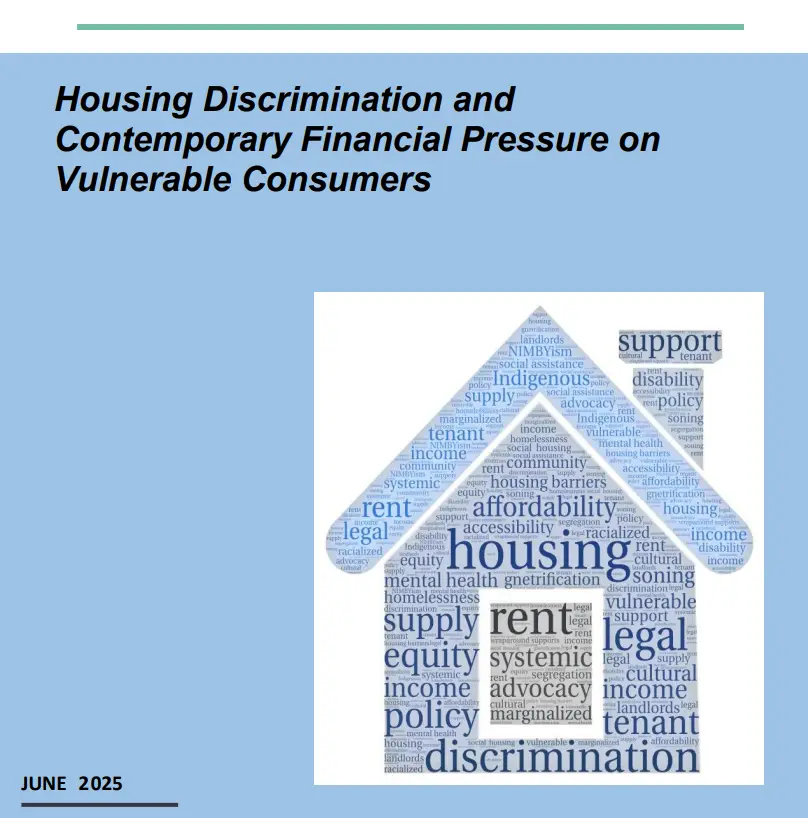
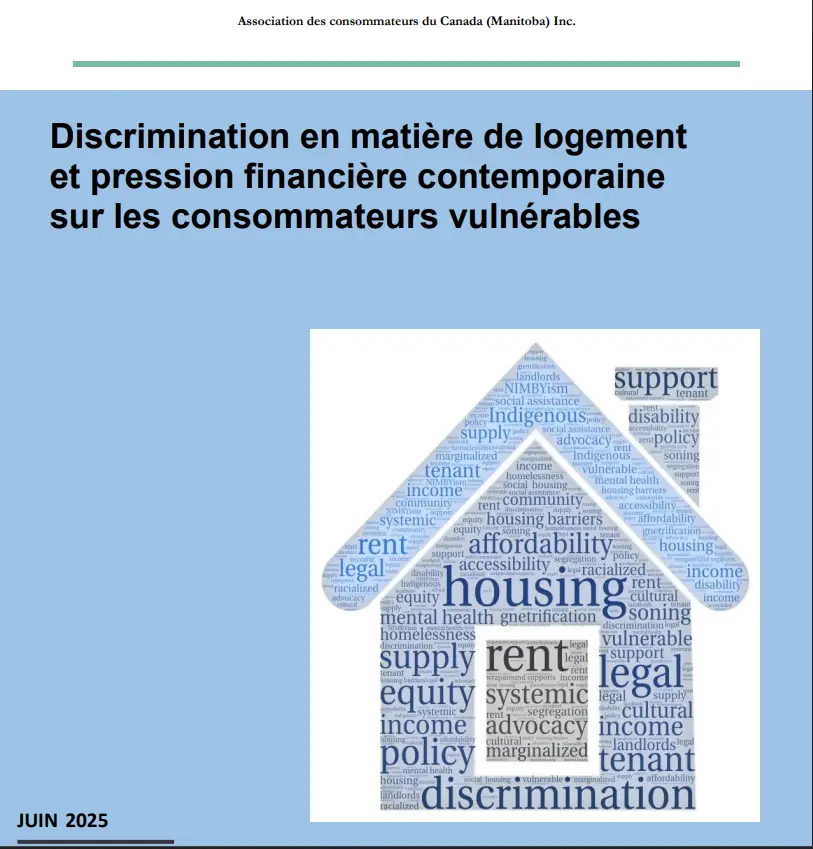
Housing Project
David and Goliath

Your Voice Matters - Final report
FINAL Tackling-energy-poverty-research-report
Whats the Right Number - Final Report